
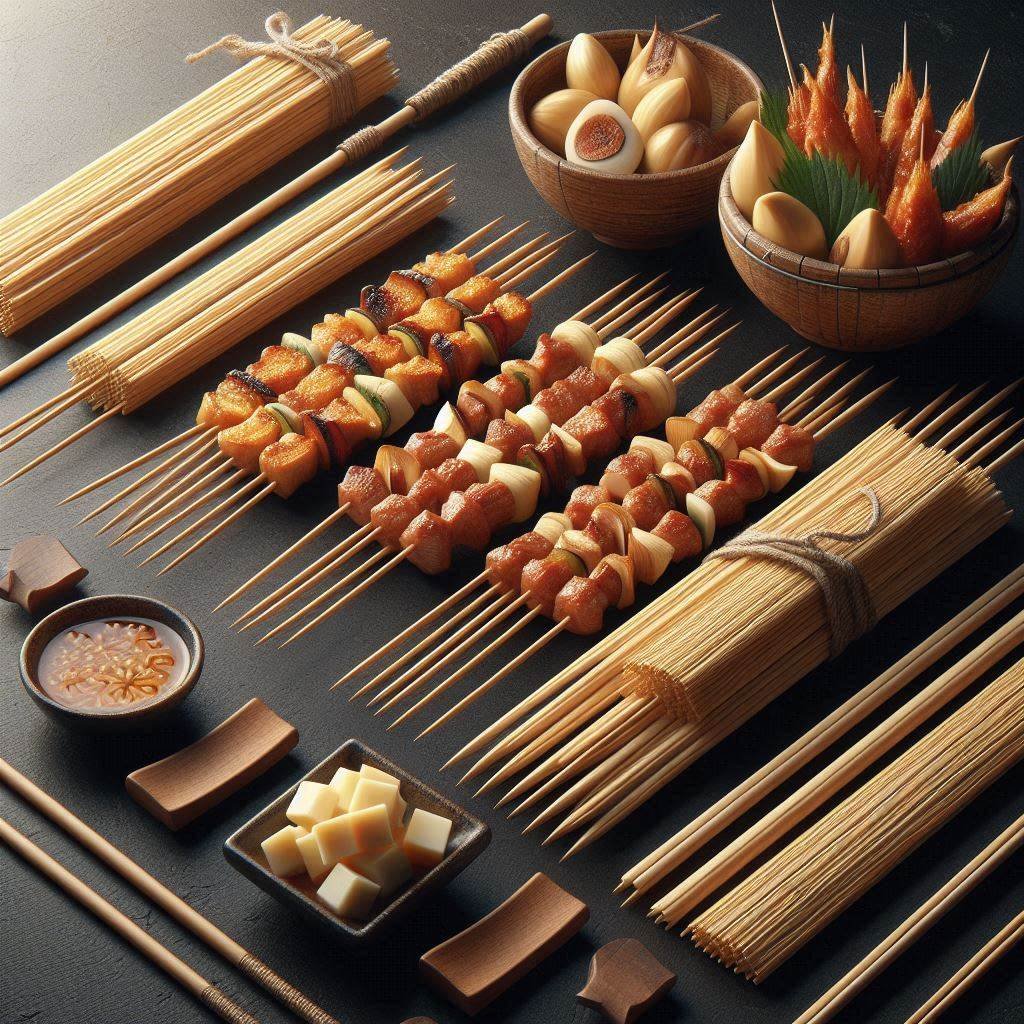
Ever tried making yakitori at home and wondered why something just felt…off? If your juicy skewered chicken is sliding off metal rods or tasting like burnt metal, then it’s time to switch to bamboo skewers for Japanese yakitori. These traditional grilling tools are more than just sticks—they’re the heart of the yakitori experience.
When you’re trying to capture the soul of Japanese street food, the right skewer matters. Let’s explore why bamboo skewers are the gold standard for yakitori lovers everywhere.
Key Takeaways:
-
Bamboo skewers add flavor and authenticity to yakitori.
-
They’re eco-friendly, heat-resistant, and safer to handle than metal.
-
Flat skewers offer better grip on meat, especially with fatty cuts like chicken skin.
-
Proper soaking is crucial to prevent burning during grilling.
-
Sustainable and affordable, they’re used by both chefs and home cooks.
Stats That Show Bamboo Skewers are Leading in Japanese Grilling
| Feature | Bamboo Skewers | Metal Skewers |
|---|---|---|
| Eco-friendly | ✅ | ❌ |
| Flavor impact | Neutral | Often metallic |
| Cost per 100 units | ~$7.99 | ~$24.99 |
| Used in traditional yakitori | ✅ | ❌ |
| Heat conduction | Low (safe) | High (burn risk) |
Why Yakitori Deserves the Right Skewer
The Soul of Japanese Street Food
Yakitori, which literally means “grilled chicken,” is more than a quick snack—it’s a cultural symbol. Served on skewers in izakayas and street stalls, it requires just the right char and smoky essence. That’s where bamboo steps in.
Why Bamboo Skewers Are the Traditional Choice
Metal skewers just don’t cut it here. They heat up too fast and can burn both your meat and your hands. Bamboo, on the other hand, offers a perfect blend of function and authenticity.
What Makes Bamboo Skewers Perfect for Yakitori?
Heat Resistance and Grilling Performance
Bamboo skewers don’t conduct heat like metal, so you can handle them with ease while grilling. This makes flipping and serving safer and more precise.

Eco-Friendly and Sustainable Advantages
Did you know bamboo is one of the fastest-growing renewable resources on Earth? That makes bamboo skewers a sustainable, biodegradable alternative to plastic or metal. Here’s the link to learn more about bamboo.
Easy Handling for Chefs and Guests
From kitchen to plate, bamboo skewers are easy to grip and serve. Plus, they don’t get scalding hot—so no burnt fingers!
Types of Bamboo Skewers Ideal for Yakitori
Flat vs Round Skewers: Which Is Better?
Flat skewers hold meat better and prevent spinning, especially helpful for uneven or fatty cuts like chicken thigh or skin.
Length and Thickness Considerations
Standard yakitori skewers are around 6-7 inches long and relatively thin—perfect for one-bite servings.
Double-Prong Skewers for Special Cuts
For heartier cuts or veggie stacks, double-pronged bamboo skewers offer extra stability.
Preparing Bamboo Skewers the Right Way
Soaking Bamboo Skewers Before Grilling
Always soak your skewers for at least 30 minutes before grilling. This prevents them from burning or catching fire over the heat.
Storage and Sanitation Tips
Keep them in a dry, sealed container to prevent mold. Use a food-safe sanitizer if you plan to reuse.
Reusability: Fact or Fiction?
While technically reusable, most bamboo skewers are designed for single use. However, some thicker versions can handle two to three rounds of grilling.
Yakitori Cuts That Work Best With Bamboo Skewers
-
Chicken Thigh (Momo): Juicy and flavorful—holds well on bamboo.
-
Chicken Skin (Kawa): Needs flat skewers to avoid slipping off.
-
Organs (Heart, Liver, Gizzard): Best grilled close over charcoal for that umami punch.
Grilling Techniques with Bamboo Skewers
Yakitori Over Charcoal: Why It Matters
Charcoal gives yakitori that smoky kiss that gas grills can’t mimic. Bamboo skewers hold up well with charcoal heat.
How to Turn Skewers Without Burning Your Fingers
Use tongs or wear gloves. Bamboo’s low heat conductivity gives you more control and safety.

Getting That Perfect Sear and Char
Don’t overcrowd your grill. Let each skewer get full contact with the heat for that signature Japanese caramelization.
Presentation and Serving Tips
Serving Directly on Skewers
In Japan, yakitori is eaten straight from the stick. Presentation is simple—meat first, garnish later.
Garnishes and Side Pairings
Add a sprinkle of sea salt, a brush of tare sauce, or a squeeze of lemon for flavor. Pair with sake or cold beer.
Traditional Plating in Izakayas
Plates are often rectangular or ceramic with minimal garnish—let the skewers shine.
Why Professionals and Home Cooks Alike Choose Bamboo Skewers
Versatility in Other Cuisines and Uses
Not just for yakitori—these skewers are great for satay, veggies, or even desserts.
Bulk Buying for Yakitori Pop-Ups and Food Trucks
Buying bamboo skewers in bulk is affordable and convenient, especially for food vendors.
Cost-Effectiveness and Convenience
A 100-pack goes a long way. They’re lightweight, disposable, and easy to store.
Bamboo vs Metal Skewers: The Yakitori Showdown
Flavor Differences
Metal can impart a metallic aftertaste. Bamboo remains flavor-neutral, letting the meat speak for itself.
Safety and Handling
Metal skewers burn your hands fast. Bamboo? Not so much.
Environmental Impact
Bamboo wins—it’s biodegradable, sustainable, and safe for the planet.
Where to Buy the Best Bamboo Skewers for Yakitori
What to Look for in Quality Skewers
Go for smooth finishes, no splinters, and food-safe certification.
Online vs Local Suppliers
Online offers more variety. For top-notch skewers, check out Bamboodee.
Latest Trends in Yakitori Skewering
Fusion Styles Using Bamboo Skewers
From Korean BBQ to Mexican elotes, skewers are going global.
Creative Plating and Instagram-Worthy Designs
Add edible flowers, sauce drizzles, or minimalist ceramic trays for social media-ready dishes.
Eco-Conscious Dining Experiences
Diners today love sustainability. Bamboo skewers show you care about both taste and the environment.
Stats and Data: Bamboo Skewers in Yakitori Business
-
60% of Japanese restaurants use bamboo skewers exclusively.
-
Bamboo skewer production has grown 25% annually since 2020.
-
Over 70% of food trucks in Japan now use disposable bamboo skewers.
Common Mistakes When Using Bamboo Skewers
-
Not soaking them in water
-
Piling on too much meat
-
Reusing brittle or charred skewers
Care Tips and Disposal
Composting Bamboo Skewers
Yes, they’re compostable! Break them into smaller pieces first.
Safe Disposal Practices
Toss them in your green bin or compost pile—no guilt involved.
DIY Uses After Grilling
Use old skewers for garden markers, craft sticks, or even kindling.
The Future of Yakitori and Bamboo Skewers
Bamboo isn’t just a tradition—it’s the future. As diners crave authenticity and sustainability, bamboo skewers are leading the way in responsible, flavorful grilling.
Conclusion: Why You Need Bamboo Skewers for Japanese Yakitori
If you’re serious about yakitori, ditch the metal rods and embrace the tradition with bamboo skewers for Japanese yakitori. They’re safer, greener, and more flavorful—what more could you ask for?
FAQs
1. Do I need to soak bamboo skewers for yakitori?
Yes! Soak them for at least 30 minutes to prevent burning.
2. Can I reuse bamboo skewers?
Technically yes, but it’s not recommended unless they’re thick and undamaged.
3. What size bamboo skewers should I use for yakitori?
6 to 7 inches long, flat skewers work best.
4. Are bamboo skewers safe for charcoal grilling?
Absolutely—they hold up well when soaked properly.
5. Where can I buy high-quality bamboo skewers for yakitori?
Visit Bamboodee for premium, eco-friendly options.